
Follow DIY Superstore on social media to stay updated on the latest specials, products and news

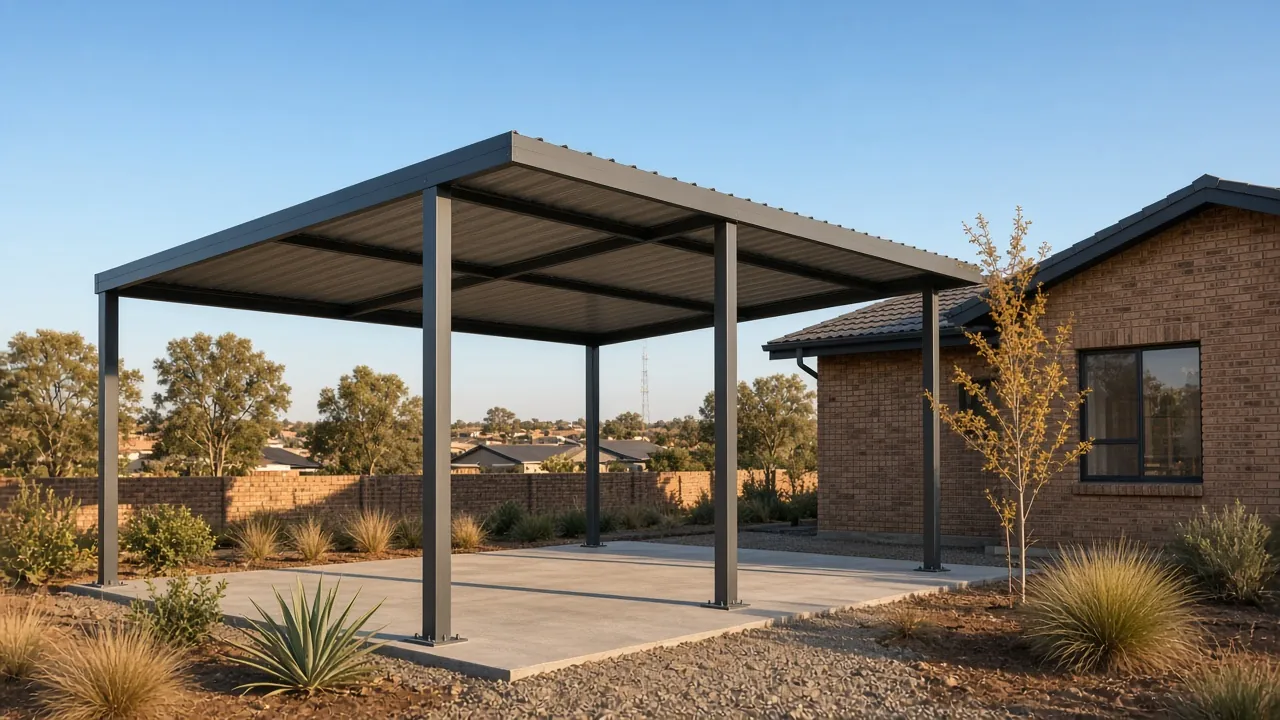
If a welder or builder has handed you a materials list for a carport, lean-to or patio cover, there’s a good chance it says something like “4 × 200×200 base plates, 1 box tek screws, 6 m fisher board”. Three items, three names that don’t explain themselves. This guide tells you what a base plate, a tek screw and a fisher board are, what each one does, and how to pick the right size before you head to DIY Superstore in Oranjesig, Bloemfontein.
The easiest way to understand these three items is to picture one simple steel carport going up in a Bloemfontein back yard:
Footing to roof edge, that’s the whole job. Let’s take them one at a time.
A base plate is a flat square of structural steel fixed to the bottom of a steel post or column, so the post can be bolted or anchored to a concrete footing or slab. It spreads the post’s load over a wider area and keeps the post square and upright. That’s why you’ll find base plates under carports, patio covers, steel columns, gate posts and light steel structures.
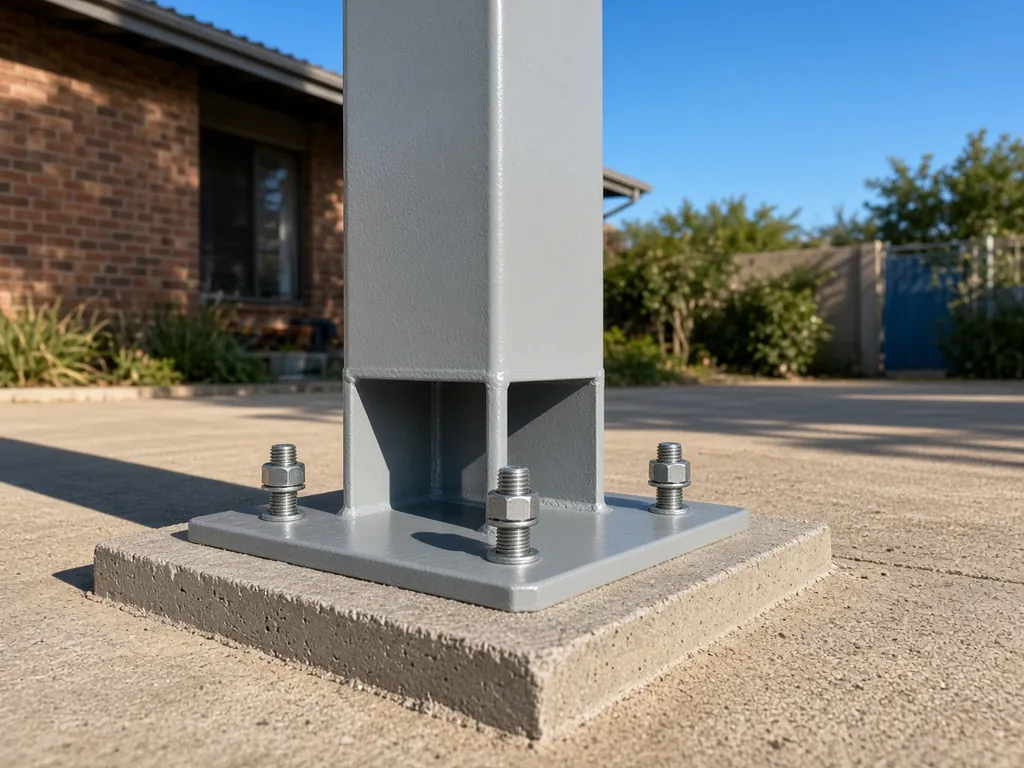
The hot-rolled steel base plate we sell is a structural-quality plate, so it’s also used for general fabrication, road plates and trench coverings. Its smooth surface takes paint well, which matters for anything that stands outside through a Free State summer of thunderstorms.
Our steel base plates come in these plate sizes and thicknesses:
So whether your list says a 150×150 base plate for a light pergola post, a 10 mm base plate for a heavier column, or a 400×400 base plate for something bigger, it’s in the range.
A few plain rules of thumb:
For anything load-bearing, the exact plate size and thickness should come from your welder, engineer or builder. If you’re unsure, bring your plans or post sizes in and we’ll help you match the right plate. If you’re still choosing the posts themselves, our rundown of structural steel shapes explains square tubing, channels and angles.
A tek screw is a self-drilling screw with a small drill-bit point on the end. It drills its own hole and forms its own thread in one go, so you don’t need to pre-drill. In South Africa tek screws are the standard fixing for IBR, corrugated and Chromadek roof sheets onto steel or timber purlins, and for cladding.
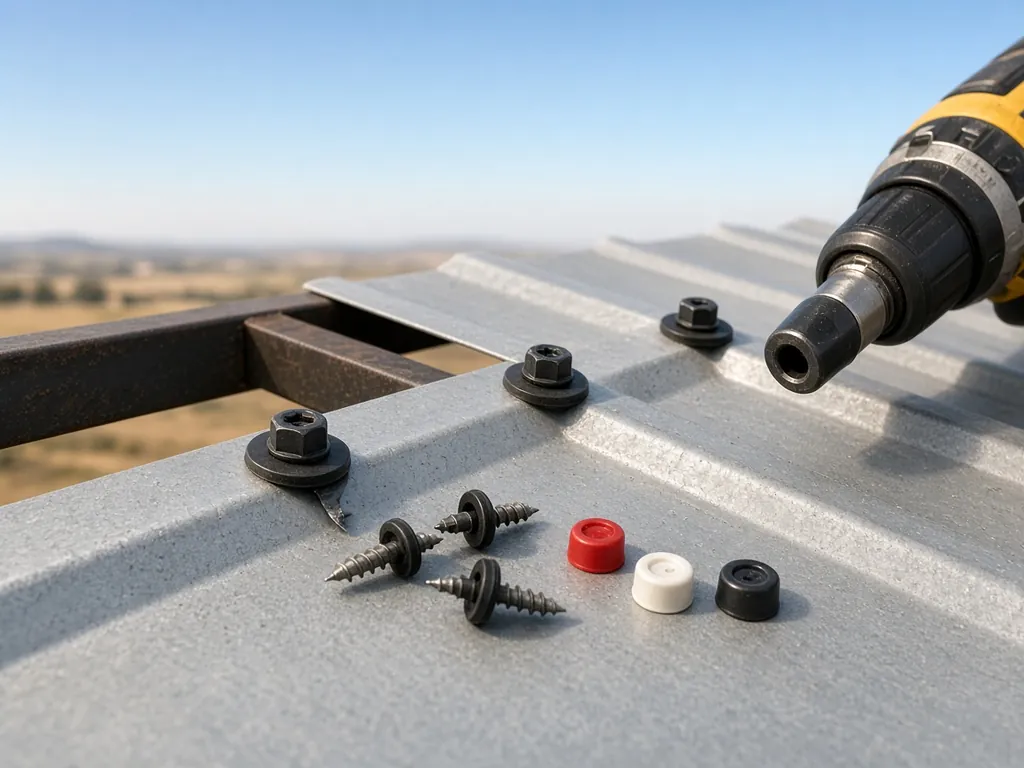
You’ll see a few types on the shelf, and the names do tell you something:
The simple rule: a self-drilling point for steel purlins, a coarse thread (like Type 17) for timber purlins. The screw must be long enough to go through the roof sheet’s rib and well into the purlin. Tell us your sheet profile and purlin type and we’ll confirm the right screw and length.
A bonded EPDM washer sits under the head and seals the hole against leaks, which you’ll be grateful for in a Bloemfontein hailstorm. Tek screw caps clip over the head to protect it and give a tidy finish; the range is listed in colours such as charcoal, red, green, brown, white and terracotta, so ask us what’s on the shelf to match your roof.
Drive tek screws with a drill and the right hex socket, and stop as soon as the washer is snug. Over-tightening crushes the washer, and a crushed washer is where leaks start.
“Fisher board” is the way many South Africans say and spell fascia board. It’s the long board fixed along the lower edge of a roof, across the ends of the rafters or trusses. It protects the timber ends from weather, gives the roof a neat finished edge and usually carries the gutter. On the sloping gable end, the same kind of board is called a barge board.
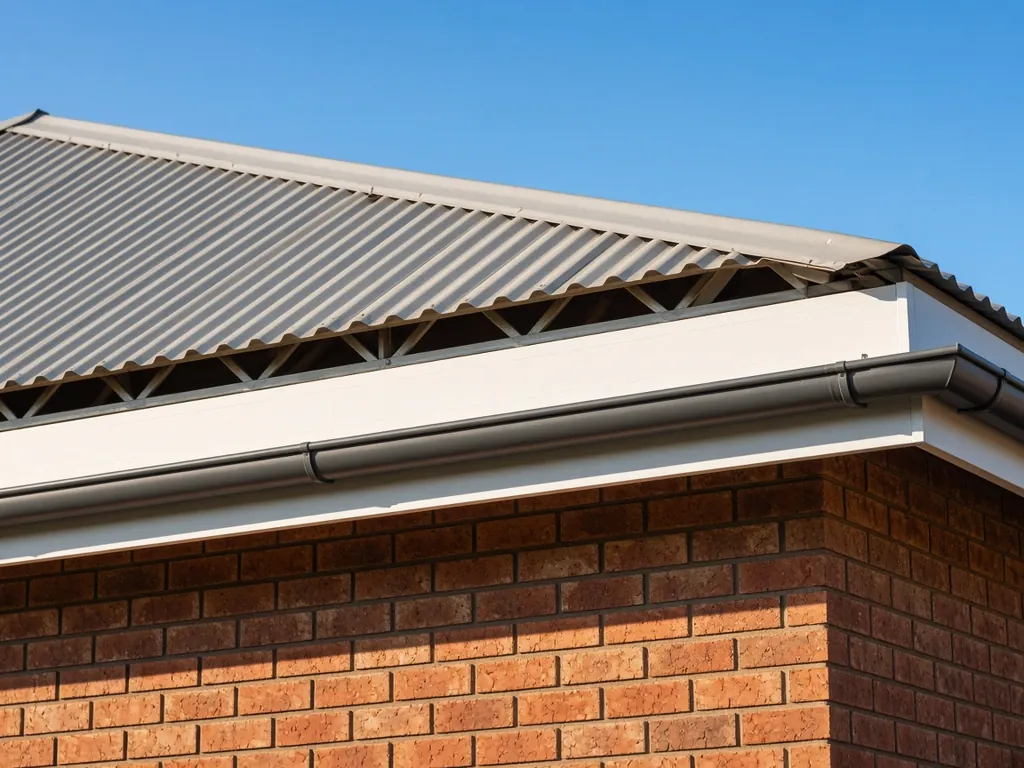
There are two main options in our fascia and barge boards range:
Measure every roof edge that needs a board and add the lengths together. Divide by the board length you’re buying (for example 6.0 m steel fascia or 3.6 m Nutec) and round up, then add a little extra for joints and corners. Remember joiners and corner pieces where boards meet, and the right fixings, such as barge board nails for Nutec.
Prices depend on size, thickness, length and quantity, and steel prices move, so we don’t publish a fixed price list here. For today’s price on a specific base plate size, a box of tek screws or a 6 m fisher board, WhatsApp us on 083 543 2659 with your list and we’ll come back to you. Our steel prices in South Africa article explains what drives steel costs.
Planning the roof sheets too? Our guide to Chromadek vs IBR vs corrugated roof sheets in Bloemfontein will help you choose, and we offer a roof sheeting service as well.
A base plate is fixed to the bottom of a steel post or column so it can be bolted to a concrete footing. It spreads the load and keeps the post square, for carports, patio covers, gate posts and steel structures.
It depends on the post size, height and roof load. The plate must be bigger than the post with room for bolts. Your welder or engineer should confirm the size and thickness; we stock 75×75 mm to 500×500 mm in 1.6 mm to 10 mm.
A tek screw has a drill-bit point, so it drills its own hole and makes its own thread. A normal screw usually needs a pilot hole, especially in steel.
Yes. “Fisher board” is a common South African spelling of fascia board, the board along the lower roof edge that protects the rafter ends and carries the gutter.
Yes, we deliver, but the cost and distance depend on the order and where you are. WhatsApp 083 543 2659 for a delivery quote.
Whether you’re building a carport, a lean-to or fixing a tired roof edge, you’ll find base plates, tek screws, washers, caps and fascia boards under one roof. Visit us at 17 Monument Road, Oranjesig, Bloemfontein, bring your materials list, or WhatsApp us on 083 543 2659 for prices and availability.


